Monday, June 12, 2006

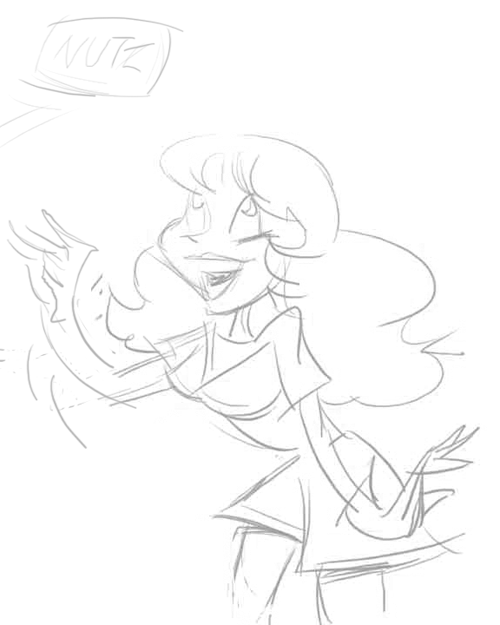
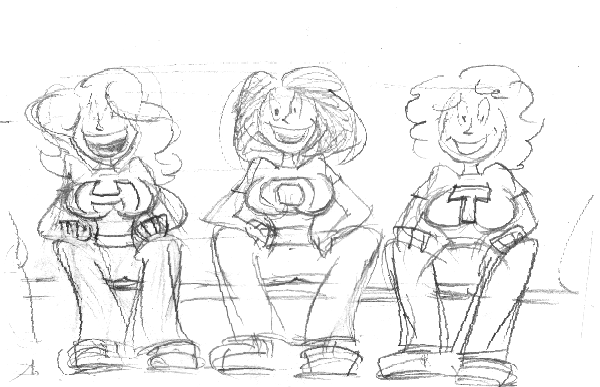
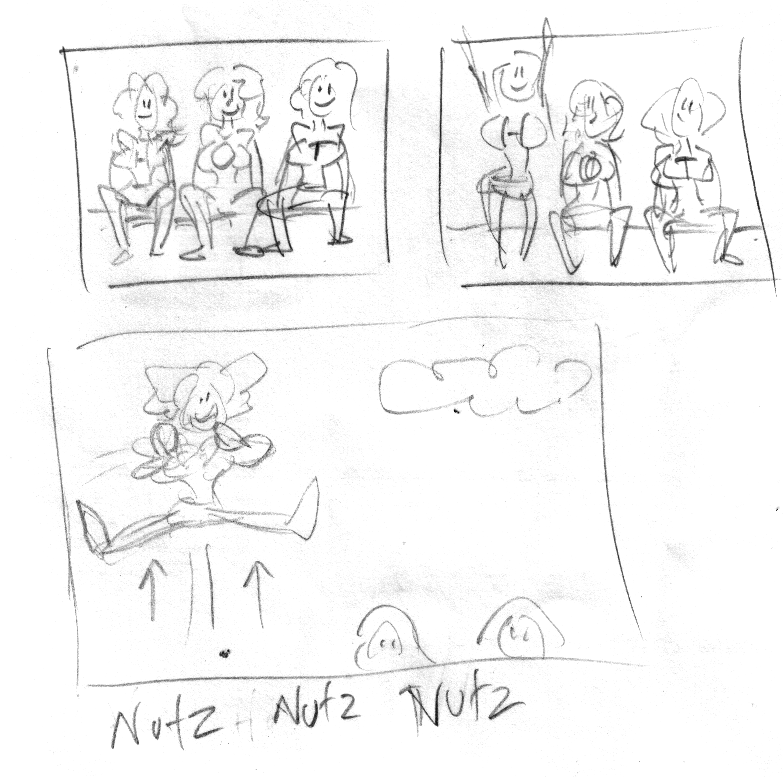
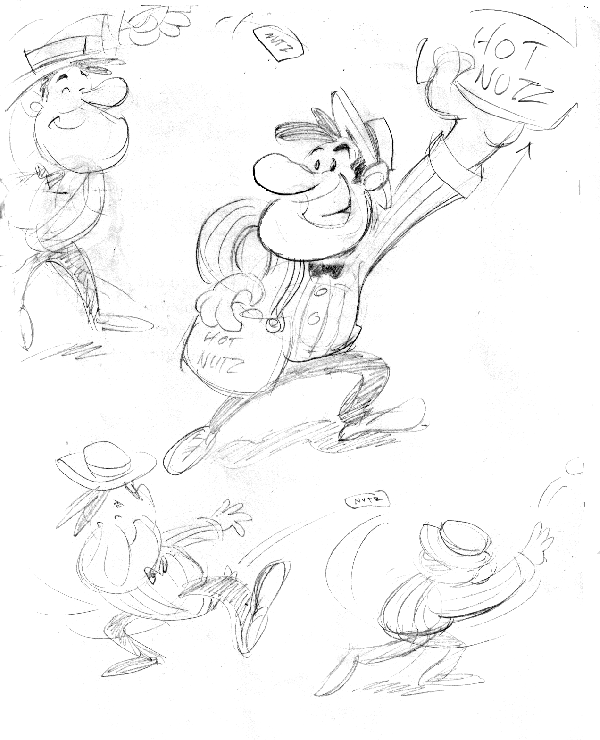
Holy Hot Nuts! Here are some rough concept sketches and thumbnails... Just scroll down for more and click the images for a larger view.


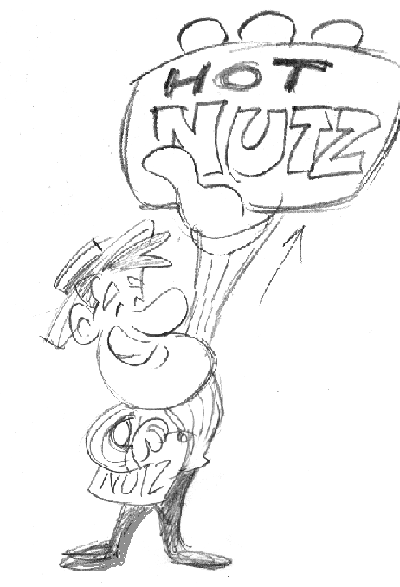
The "Byrd" is a planned interactive animation. Users will be able to click and paint the egg as Byrd makes cantankerous comments.

Tuesday, January 25, 2005

Disney Abandons Traditional Animation??

That statement seems unthinkable but after reading the inside story, I can only conclude that it's already happened! The only hope would be to remove Michael Eisner and do a complete 180 of his policies - i.e. rehire an army of laid off artists. Read on and you'll see what I mean.

Last year, Disney/Pixar released "The Incredibles", a great action/adventure comedy that was originally planned as a 2d animated film. Not being a huge fan of 3d computer animation, I didn't run to see it right away - but when I finally did - WOW! It was terrific! I later read of the many traditional 2d techniques that were applied to the characters' creation and movements. The film even included a cameo of Frank & Ollie, legendary animators and writers of one of my favorite books: Illusion of Life - a virtual textbook of Disney animation.

The Incredibles simply looked terrific in 3d and most is certainly earning tons of money, just like it's predicesors Finding Nemo and Shrek I & II. Thus bringing us to the sole motivating factor behind Disney's decisions: money.

Two years after the fact, it finally came to my attention that they had closed the doors on their Orlando Animation Unit at MGM as well as their Feature Animation departments in Burbank and all over the world!

Ever since the Florida studio first opened back in 1989, I had wondered what it would be like working on staff as a feature animator - but then imagined it might be somewhat awkward, considering that the artists were continually being watched by tourists behind the glass at the theme park. That would have been a minor concern as I later learned.

I finally had a chance to tour the studio in 2002 and was impressed by the quality of work being produced there (Lilo and Stitch, Brother Bear). Perhaps it wouldn't be so bad being an artist in a fishbowl afterall. It was however noticably quiet, with only a few artists walking about in the mostly empty studio. The tour guides simply said that most of the staff was on "hiatus". I later learned the true story of what had been happening there with nearly 260 artists put out to pasture in favor of cutting back on feature production.

It seems that the overwhelming success of 3d computer animated features caused the Disney suits to rethink their commitment to the standard medium. A handful of the misplaced Orlando artists were moved to other studios. Some have been incorporated into 3d projects but most were just plain sent packing.

During my visit, I spent a little time talking to one of the artists in the cel-art shop as he drew Jessica Rabbit for me. I asked if he'd ever considered working in the animation department. He recoiled with a decisive "No way!" followed by horror stories of Eisner and his massive layoffs. No wonder Walt's nephew Roy quit in protest. What the Mouse corporation intends to do from now on remains to be seen but the sad, undeniable truth is that there are currently no 2d animated features in production ... or even being planned.

Recently during the Rose Bowl, a commercial aired featuring 3d versions of all the classic Disney characters (Mickey, Goofy Donald, Dumbo) making their way to Disneyland for its 50th Anniversary Celebration. It looked ok but I couldn't help but shudder as I watched the blobby floating genie and comtemplated the evident death of Disney cel animation as we know it.

Now you can imagine how I choose to answer when I'm asked that age old question: "Why don't you work for Disney?" -SJS

Here, are some links so you can read the whole story for yourself:
http://www.jimhillmedia.com/mb/articles/showarticle.php?ID=214
http://www.savedisney.com/archives/ani_archive.asp
http://filmforce.ign.com/articles/571/571987p1.html?fromint=1
http://www.dreamonsillydreamer.com/
Sunday, January 26, 2003

What I learned at the Cartoon Workshop:

This month's workshops have wrapped up and now its time to post some reflections. The students were great and work was inspiring. Some of them even chose to return for all the classes. The first weekend's sessions introduced basic cartooning and the second delt with comic strips, a more specialized subject that may be refined or reserved for elective projects or promoted to libraries or art schools in the future. The list below, derived from personal notes, will hopefully contain some useful tidbits for artists, teachers or anyone having to give a presentation or promote group participation and collaboration.

1: Worksheets!!!
Have lots of worksheets on hand to guide along the script and avoid getting off track, out of sync with what needs to be learned. Mini-assignments help guide anarchistic minds that would otherwise disrupt the class with confusion. Giving everyone something to ponder provides nice quiet pauses for soaking in new ideas.

2. Questions:
Find new ways and fun exercises to encourage participation and rewards for creative thinking and asking good questions. When interruptions and pointless questions do come up, take time to turn things around by asking them back in different ways, one-on-on. Use parables: "When you first learned to tie your shoes..." Identify and nurture the most important renaissance word: Attitude: "Your brilliant super-positive mental attitude is very important when you are learning a new skill in life, especially drawing in 3-D!" -Mark Kistler.

3: Visual stimuli vs visual distraction:
Have samples and reference nearby but choose what you let students see and avoid displaying too quickly. Keep some items out of sight until needed. "Can I see that Spiderman Comic?, Spongebob toy, etc."

4: Video:
Using video is fine but don't allow it to be the guide. Mute sound, narrate and follow your own script. Have it edited and timed. Do "shape search sketches" or pause and have a specific exercise for each point.

5. Breathers and Self Animation:
Sometimes you need to enforce breaks. "Stand up and stretch.." Consider a "walk and draw" or "cartoon scavenger hunt" exercise where everyone must get up and move around the room. (small notepad or sketchbook required) Demonstrate this early by walking around as everyone does shape warm ups.

Artistic concentration resists being broken but is easy to regain if planned and done correctly. Have a short exercise to get everyone back in gear and pumped. The brain-toss word exercise is a good example: students toss a beanbag to each other and speak out a random word when caught - each word is written in the worksheet for story inspiration.

6. Accomplishment:
Self satisfaction comes through attainable assignments. Get students to create their own reference (action page, model sheet, splash panel, mini comic) step-by-step, all the while making something they'll want to keep. Start small and they may work their way up to something really worthwhile.

Tuesday, April 23, 2002

Walt Disney wrote this about animation in 1940 and it still rings true today:

"How very fortunate we are as artists to have a medium whos potential limits are still far off in the future; a medium of entertainment where, theoretically at least, the only limit is the imagination of the artist. As far as the past, the only important conclusion that I can draw from it is that the public will pay for quality, and the unseen future will take care of itself if one just keeps growing up a little every day."

Tuesday, March 12, 2002

John K's Jetsons, Cartoon Research and Animation Blast

While watching John Kricfalusi's version of the Jetsons on Cartoon Network (very twisted), I noticed a listing of 'Flash Animators' in the credits and decided to do a name search and found a couple of great and huge animation sites.

Cartoon Research is put together by Jerry Beck, author of Looney Tunes and Merrie Melodies : A Complete Illustrated Guide to the Warner Bros. Cartoons. The site is packed with fascinating cartoon history and current animation news.

Animation Blast is a blog-style magazine site with some good insider info and great interviews. Caution: be prepared to get out the Visine and spend countless hours delving into these sites.

Saturday, March 02, 2002

Pluto and The Big Cartoon Database.

When I was 5 years old, Pluto was my favorite cartoon character. This memory came to me last Saturday when I took the neighbor kids to see Snow Dogs. We heard they were showing a classic Pluto short before Peter Pan, so we decided to sneak over and watch Pluto's Fledgeling. It was the first time since I was little that I had seen a Disney short on the big screen.

A few years back, the cable channel Toon Disney debuted. Wow, 24 hours of classic shorts and features, right? Wrong. To catch any, you have to be up at 6am or midnight and watch Quack Attack - a half hour containing 3 shorts - surrounded by hours of their standard programming: Pepper Ann, Care Bears, Doug.. uugh! (However Teacher's Pet is funny and worth watching at 4 and 10pm).

Back to the classics: I decided to do a google search on one of the Pluto shorts and came across this site: The Big Cartoon Database complete with director, voice talent and animator credits. It makes you wonder how many of the old timers are still alive.

Friday, March 01, 2002

Drawing muscles like all others in our body operate at their peak efficency through regular activity or exercise. Betty Edwards' book Drawing on the Right Side of the Brain reminds us that 5 or 10 minutes of regular drawing exercise a day is collectively better than a hour of weekly instruction.

In leu of a figure drawing class, I find the best way to exercise that half of the brain is to keep a sketchpad and lots of pencils next to the couch. That way, I'm able to do quick gestures of the figures on TV, the easiest being cartoons. Powerpuff Girls and Dexter have some of the simplest forms to start with (the former having great villans).

The drawings are not designed to be displayed as finished art. These are just quick 5-10 second studies to help you see the shapes, expressions and movement of the characters - to take mental snapshots and quickly transfer this to paper. As you progress, you'll find it easier to capture quicker and more complex characters like Looney Toons. Of course genius and excellence in art will take more intensive hours of dedicated study and practice, but I believe these quick excercises will make that study flow easier and prevent "creative blockage". Now I just need motivation to get off the couch and exercise those other muscles.

Thursday, February 28, 2002

Drawing - Cartoons, caricatures, comics, animation, sculpting and various lessons learned therein.
The blog purpose will be to inspire and encourage daily, regular exercise of the "drawing muscles" through practical ideas, history reference and links to related sites. Sketchbook drawings will be captured to illustrate text.